Can a Non-Tesla Charge at a Tesla Charger? (2026 Guide)
Yes — but it depends on the charger. Here's exactly how to charge a Hyundai, Kia, Ford, VW or other non-Tesla EV at Tesla Superchargers and Tesla Wall/Destination chargers in 2026, and the adapter you need.
Tesla runs the largest, most reliable charging network in North America — and if you drive a Hyundai, Kia, Ford, VW, BMW or almost any other EV, you've probably wondered whether you can use it too. The short answer in 2026 is yes, but how you do it depends on which kind of Tesla charger you're standing in front of. Get this right and you roughly double the places you can reliably charge.
The two kinds of Tesla chargers (this is the key)
Tesla operates two completely different types of charging hardware, and the answer to 'can my non-Tesla use it' is different for each.
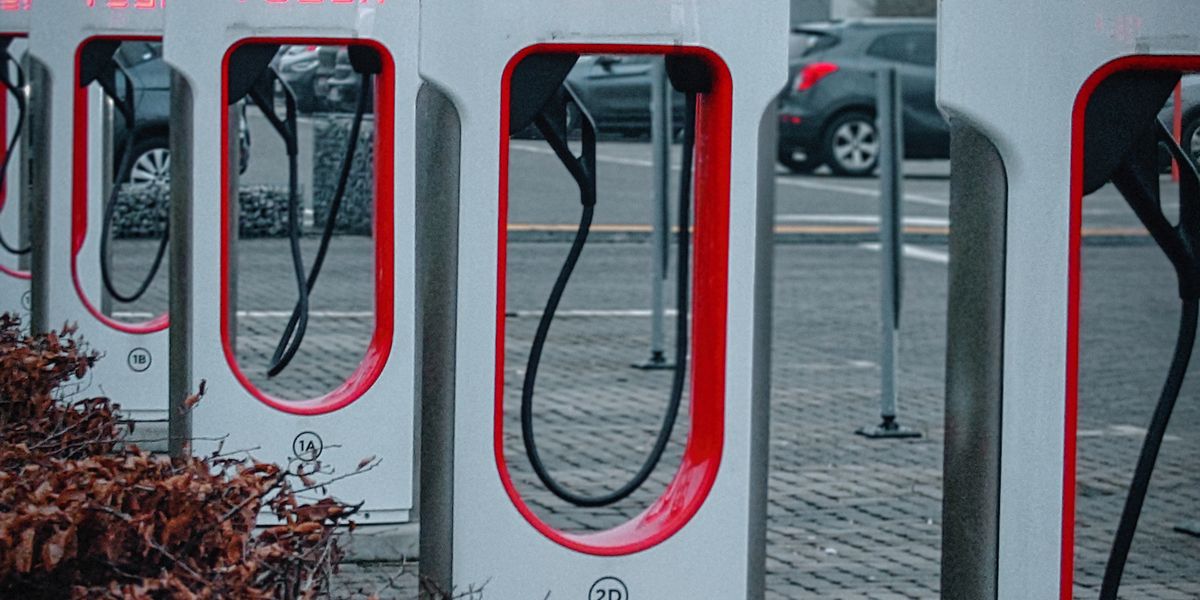
- Superchargers — Tesla's fast DC charging stations you see at highway stops. These are for quick top-ups on road trips.
- Wall Connectors & Destination Chargers — slower AC (Level 2) units at hotels, restaurants, workplaces, and homes. These are for charging while you're parked for a few hours or overnight.
Charging a non-Tesla at a Supercharger
Many Superchargers are now open to non-Tesla EVs. You don't need an adapter for these — the newer 'Magic Dock' and NACS-equipped V4 stalls, plus the in-app access Tesla has rolled out, let you start a session straight from the Tesla app. Just download the Tesla app, add a payment method, select 'Charge Your Non-Tesla,' and pick your stall. Availability varies by location, so check the Tesla app's map for sites marked as open to other brands before you rely on one.
Pricing tip
Non-Tesla Supercharging is usually a bit cheaper if you take the optional monthly membership in the Tesla app. If you only road-trip occasionally, pay-as-you-go is fine.
Charging a non-Tesla at a Tesla Wall or Destination Charger
This is where most everyday charging happens — and this is where you need an adapter. Tesla's Wall Connectors and Destination Chargers use Tesla's NACS plug, while your non-Tesla EV has a J1772 inlet. A NACS → J1772 adapter bridges the two: it plugs into the Tesla connector and gives you a J1772 plug for your car. There are tens of thousands of these chargers at hotels, parking garages, and shopping centres, and most sit unused because people assume only Teslas can use them.
Any J1772 EV works with one of these adapters — Hyundai Ioniq 5/6, Kia EV6/EV9/Niro, Ford Mustang Mach-E, VW ID.4, BMW, Chevy, and the rest. You get full Level 2 speed, the same as plugging into any other home or public AC charger.
Our recommended NACS → J1772 adapters
Lectron NACS → J1772 (48A)
- Unlocks Tesla Wall & Destination chargers
- 48A / 250V — full Level 2 speed (11.5 kW)
- Trusted Lectron build, thermally tested
- Works with all J1772 EVs
- Compact, weather-rated housing
Best for:
Hyundai, Kia, Ford, VW, BMW and other non-Tesla owners who want Tesla-network access
FOCSPROD NACS → J1772 (60A)
- Up to 60A / 250V Level 2 charging
- UL 2252 certified
- Works with Tesla Wall/Mobile/Destination
- Compact, easy to stow
- Works with all J1772 EVs
Best for:
Budget-conscious owners who want the most amperage for the money
Don't buy an uncertified adapter
An adapter passing 40–80A of current needs to be built properly. Stick to UL 2252 certified units rated at or above your charger's amperage. A $15 no-name adapter handling that kind of power is a genuine fire risk — this is the one accessory where you don't cheap out.
What you can't do
You cannot use a NACS → J1772 AC adapter to DC fast charge at an older Tesla-only Supercharger that hasn't been opened to other brands. AC adapters are for Wall and Destination chargers only. For DC Supercharging, you rely on Tesla opening the site to non-Teslas via the app — no third-party adapter safely converts Supercharger DC for a J1772 car.
The cheaper answer: charge at home
Adapters solve the occasional trip. They don't solve the weekly routine. If you're regularly hunting for a Tesla Destination Charger, a Level 2 charger on your own wall is almost always cheaper per kWh than public charging and removes the planning entirely — you leave every morning at 80% without thinking about it.
ChargePoint Home Flex
Affiliate link — we earn a small commission at no cost to you
Frequently asked questions
Will an adapter slow down my charging?
No. A quality 48–80A adapter passes full Level 2 speed to your car. Your charging rate is limited by the charger and your car's onboard charger, not by the adapter itself.
Is it safe to leave the adapter plugged in during a session?
Yes, for the duration of charging, as long as it's a certified adapter rated for the amperage. Just don't drive off with it still attached. See our full lineup and a safety rundown on the EV charging adapters page.
Does using Tesla chargers hurt my battery?
Level 2 AC charging at Wall and Destination chargers is gentle on your battery — far gentler than DC fast charging, which generates more heat. If anything, having more Level 2 options helps you rely less on fast charging. Curious how your battery is holding up? Run a free battery health check.
The bottom line
If you drive a non-Tesla in 2026: use the Tesla app for the growing list of open Superchargers, and carry a NACS → J1772 adapter to unlock the huge network of Tesla Wall and Destination chargers. It's the single cheapest upgrade to your charging life. And if you also want to charge faster at home, see our guide to the best Level 2 home chargers.
Need an OBD2 scanner for your EV?
See our top-rated picks — tested and reviewed for EV battery diagnostics.
Check your battery health now
Get a free instant estimate based on real-world data from electric vehicles worldwide.
Battery health by model
Real-world degradation curves, typical SoH by mileage and warranty terms — per model.
All modelsContinue Reading
Jaguar I-Pace Battery Health Check: SoH, Degradation, Recalls & Warranty (2026)
How to check the battery on a Jaguar I-Pace EV400: expected state of health by mileage, the OBD2 method that works on the I-Pace, what the 2019-2024 battery recalls mean for your range, and the 70% warranty floor.
Read articleHardwareBest NACS to J1772 Adapter (2026)
The best NACS to J1772 adapters in 2026 to charge your non-Tesla EV at Tesla Wall and Destination chargers. Tested picks for every budget, plus what to avoid.
Read articleWas this useful?
VoltChek is free, has no ads, and no signup. Research like this takes time to keep current — if it helped, you can chip in for hosting and data.